
My Academic Articles
Explore my collection of published academic articles, ranging a wide range of fields, including education and psychology.
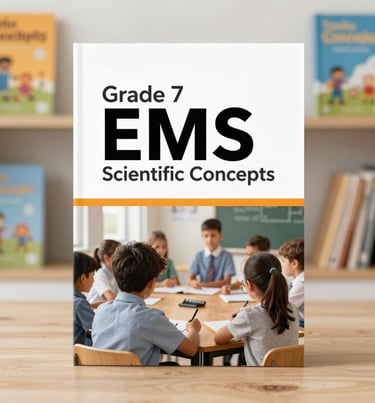
A Cultural-Historical Analysis of Scientific Concepts in a Grade 7 Economic and Management Sciences Textbook
This paper studies the extent in which scientific, or abstract, concepts are acquired through the facilitation of a Grade 7 Economic and Management Sciences (EMS) textbook, as prescribed by the South African Curriculum and Assessment Statement Policy (CAPS) document. This study is grounded in Vygotsky’s cultural-historical theory, emphasising the vital role of educational and social contexts in a child’s cognitive development. Specifically, this study explores whether the prescribed textbook describes and presents scientific concepts according to established criteria outlined by Morris et al. (2016) for scientific concept formation. Given the importance of quality textbooks in the acquisition of knowledge, this paper assesses the effectiveness of the selected textbook’s mediation and transition of spontaneous, everyday knowledge to scientific, abstract understanding. Findings of this paper indicate that few scientific concepts are made available in the textbook and there is little interweaving of science and spontaneous concepts, which is a condition for development of theoretical knowledge.
Kirstin Schumacher & Joanne Hardman
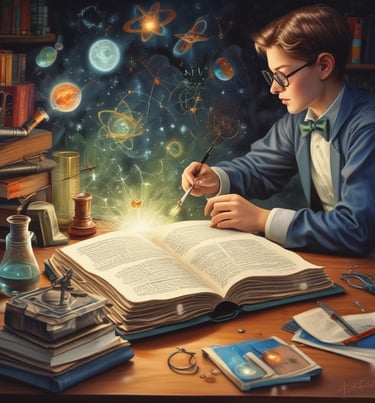
The Integration of Technology-Based Learning in Early Science Learning: An Investigative Approach
The worldwide education system, particularly STEM education, has been significantly impacted by technological advancements in the 21st century. In general, science education in preschool incorporates technology as educators engage in activities within the classroom. However, previous research indicates that numerous educators still lack a clear understanding of the most effective methods for incorporating technological tools into classroom instruction. Even more surprisingly, several educators lack the ability to effectively utilise technology in their teaching due to their perception of it challenging.
Hence, this recent study aims to identify the best methods highlighted by contemporary early childhood education (ECE) educators to enhance children's knowledge in learning science by incorporating Technology-Based Learning (TBL) environment in the classroom. The study employed a qualitatively investigative approach using three different research instruments to examine the perceptions of four Malaysian educators and to explore the experiences of 60 preschool children aged 5-6 years from three distinct preschools. The outcomes of the study were discovered through data triangulation using ATLAS.ti software. They demonstrate that educators are strongly confident that empowering children by using hardware and software in the classroom is the best practice to assist children in enhancing their critical thinking skills.
Thus, it is advocated that educators increase the number of activities using digital tools in science classrooms, but this needs to be limited to learning purposes related to relevant topics. Further study is recommended to discover simply, yet exciting, PBL activities that can be carried out by educators in preschool settings.
Azam Ghazali, Zakiah Mohamad Ashari, Joanne Hardman, Kirsty Schumacher, Farah Adiba Kamaruddin, & Sariah Ali
kirsty writes
Explore my collection of self-published novels, stories, and more.
© 2026. All rights reserved.